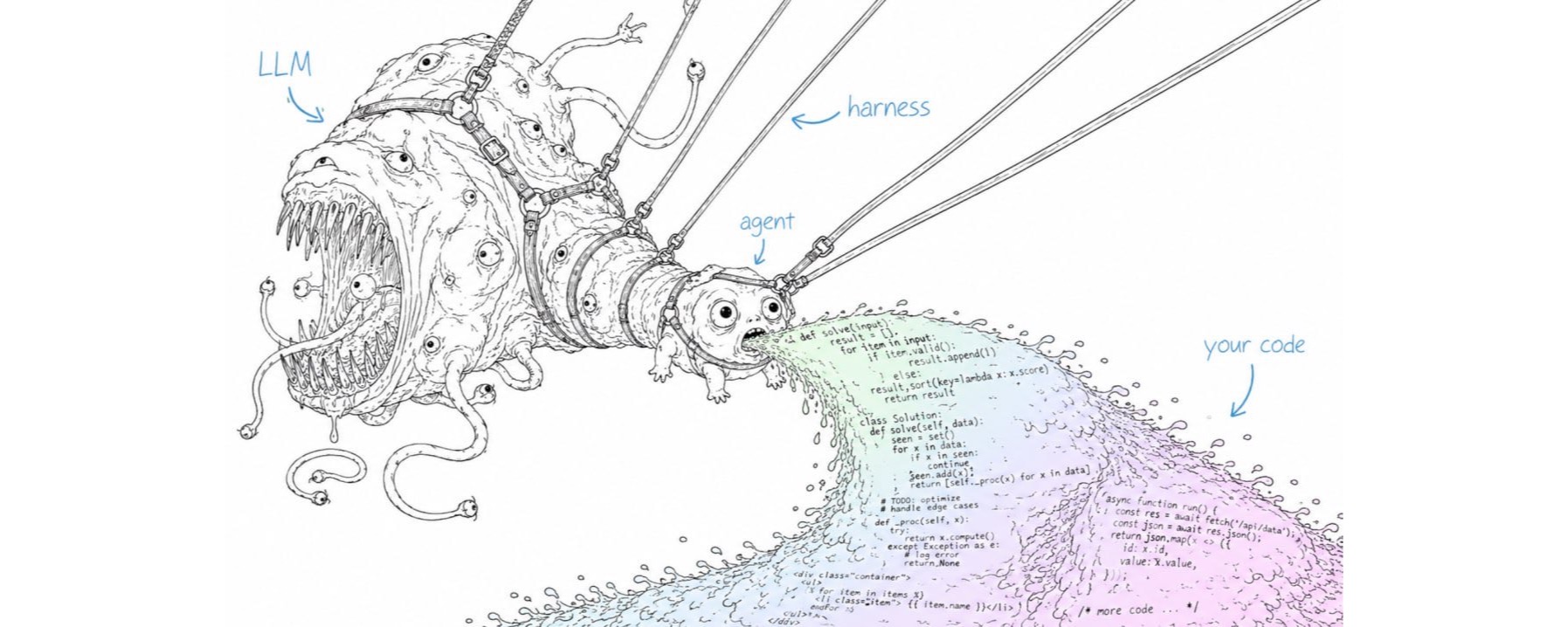
credit to @AbstractDL for the image
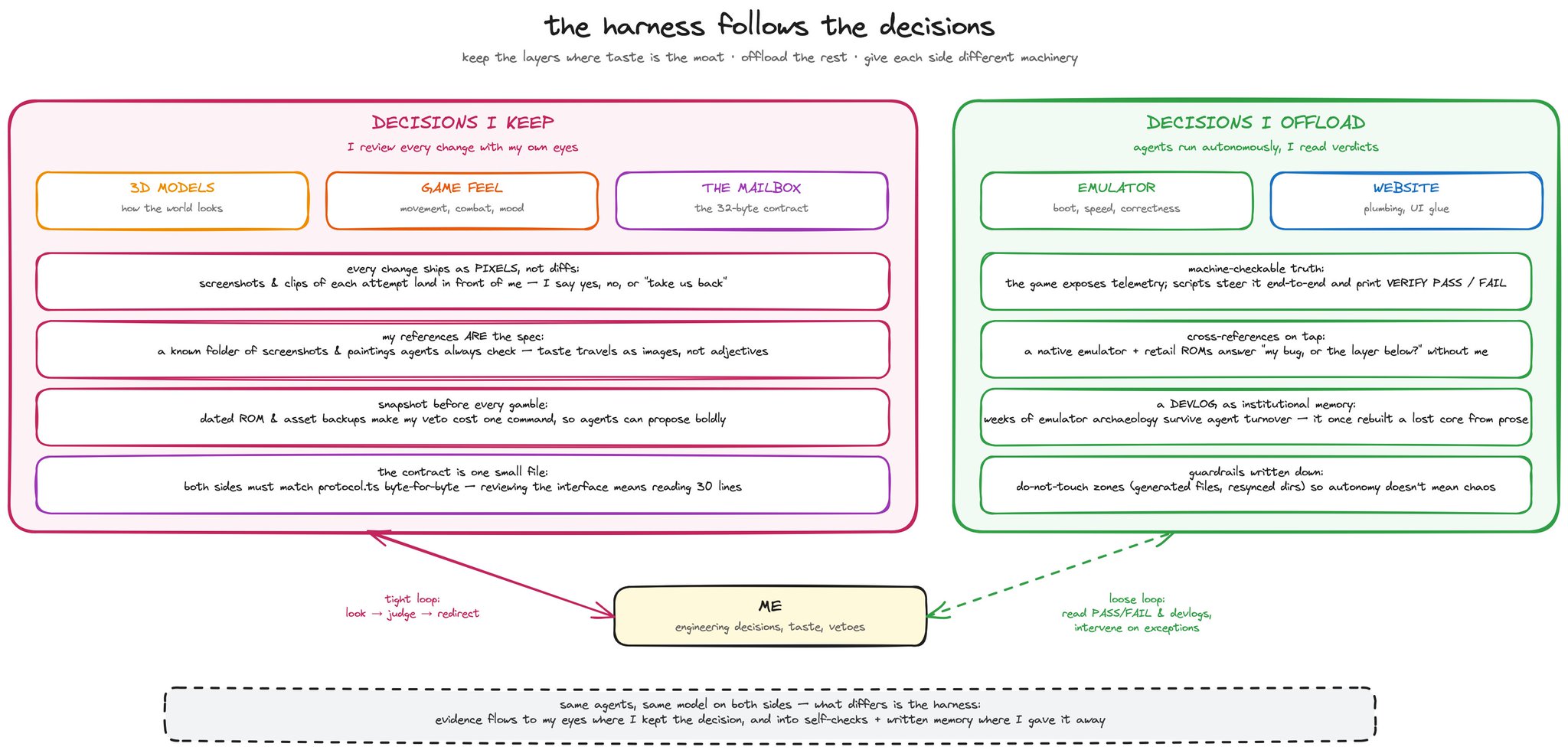
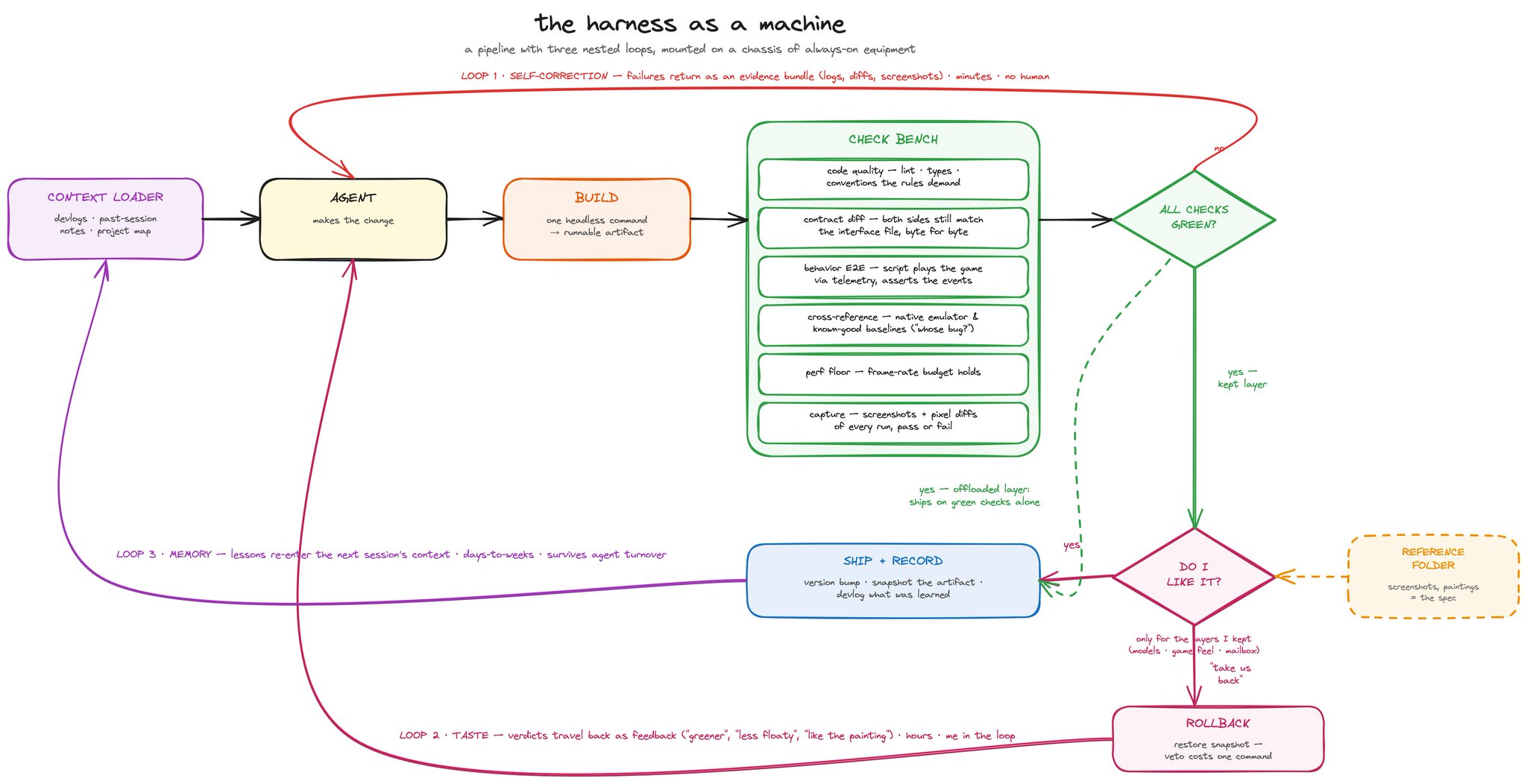
Regardless of where you personally land in the grand spectrum of AI adoption/psychosis, if you are a software engineer of any kind in the age of AI, you must have wondered: what value do I stand to contribute if AI really does take over? If coding is solved, will there be any engineering left to do? The truth is, in some ways, code has always been trivial. Sure, it has always required a certain level of skill, but at the end of the day, code is simply the medium through which we express **engineering decisions**. Whether you are coming up with new memory synchronization techniques for a concurrent runtime or choosing to make a variable’s type a short over an integer, the implementation is the easy part once every engineering decision has been made. **What’s interesting about agents is not their ability to fill in the code but the new possibility of offloading these engineering decisions to them.** I’m sure some people will recoil at the idea of offloading engineering decisions to agents, but what my examples above are meant to illustrate is that big or small, decisions are decisions, and if you are a person interested in ~~vibe coding~~ *Agentic Engineering*™, you’re guilty of wanting to offload them to agents yourself! If you actually wanted to make a spec of your entire project down to the data structures you’re using, how you’re traversing them, and whether you’re passing variables by reference or value, we’d be calling that coding, and you don’t need a model to do that. So we can see that there is this tension: we want to take advantage of coding agents to offload the engineering decisions we don’t particularly care about. At the same time, we want good output from the agents, and what’s tricky here is that "good" isn’t obvious to the model; a lot of the time, it's undefined. Here is where harness engineering (finally) comes into play, as the meta layer of engineering that systematically helps shape how our agents behave. ## Harness Engineering When I talk about agent harnesses, I’m sure names such as [@cursor_ai](https://x.com/cursor_ai) or Hermes Agent ([@NousResearch](https://x.com/NousResearch)) come to mind. These are great examples of deeply technical harnesses that fundamentally shape the model’s output or function. The team at Cursor works tirelessly on their harness, and by concerning themselves with things such as prompt-cache mechanics, context management, or tool design, they manage to have an agent that consistently scores better on coding benchmarks than the same models on the provider’s own harness.On the other hand, Hermes Agent deeply shapes how the model behaves, turning it from a passive tool that reacts to your query to an active participant that is able to drive tasks to completion and take on initiative. Now, I’m not trying to say that in the future we’re all going to be working at Cursor doing this type of work, but I need you to understand that **there is real engineering to be done here**. > So how can I benefit from harness engineering right now? By adding abstractions, and creating custom harnesses for your own work. Starting a project in 2026 shouldn’t be so much about choosing the technical stack you’re going to use, as it should be about **deciding what engineering decisions are going to define your project**, which decisions will constitute your comparative advantage over the model’s default answer (in twitter words: where your *taste* will create your *moat*), and what decisions you are willing to offload to agents. Once these decisions are nailed down, your job then becomes to set up the system that allows the project to be developed in this way. Now, this is something that we have all been doing inadvertently and to different extents. Vibe coding with Copilot and sometimes choosing to review the code where it matters, vs letting it rip for the front end, is technically a system, but in this article I am advocating for the use of custom harnesses, especially as projects grow in size. I’ve recently been doing some work in overhauling my personal website, after many months of work-shopping interesting gimmicks, I came up with the idea of featuring a Nintendo 64 emulator with a custom ROM. My idea was that since I am the one writing the game, I control its memory, and since this game will be running on an emulator on my website, the emulator’s memory should be accessible from the website. Therefore, I wanted to set apart a limited chunk of memory from the game, treat it as a “mailbox” and have my website react according to events that happen in the game.Cursor's biggest underrated advantage is that they've somehow tamed Gemini. It's the only harness that actually keeps Google models productive and on task.
— Theo (@theo) February 20, 2026
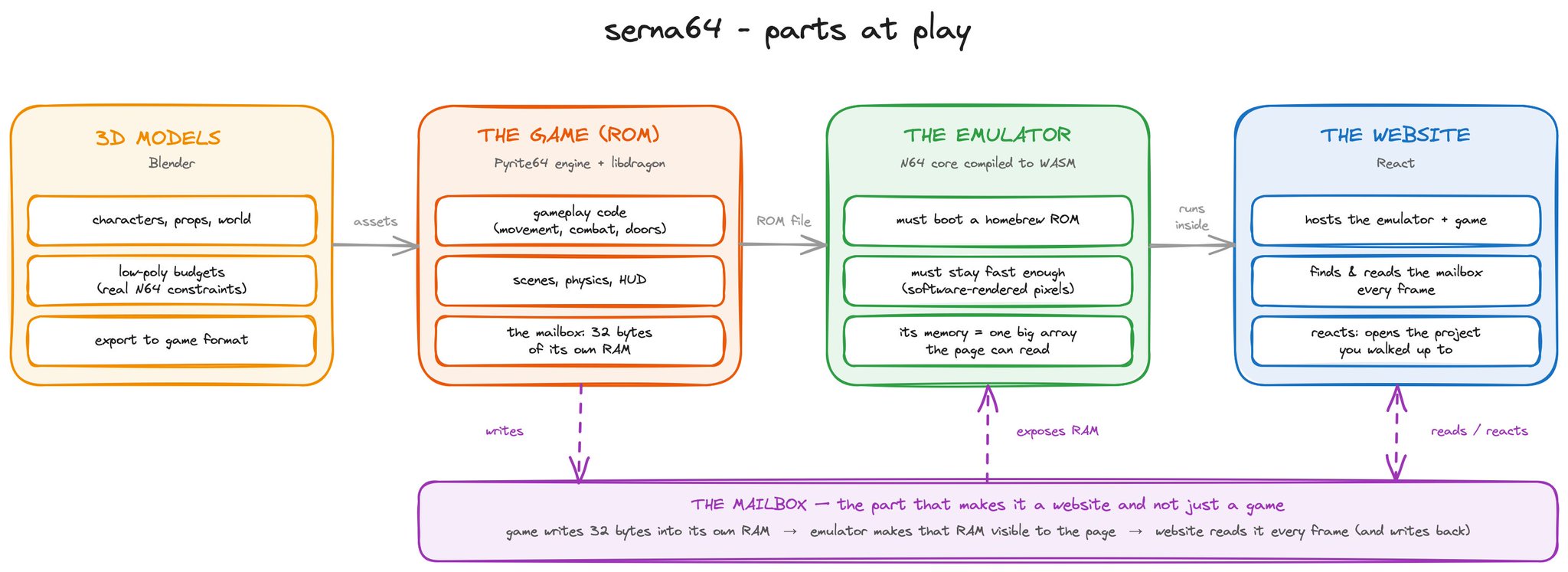
This is a simple premise, but one with a couple of moving parts:Cool personal website bro, but can you interact with it through a custom n64 ROM that is using left over space in the emulator's RAM to communicate with the site?
— Miguel Serna (@miguelfserna) July 8, 2026